- Beyond housing, meals, and delivery, now covering workwear laundry, brokerage fees, and counseling
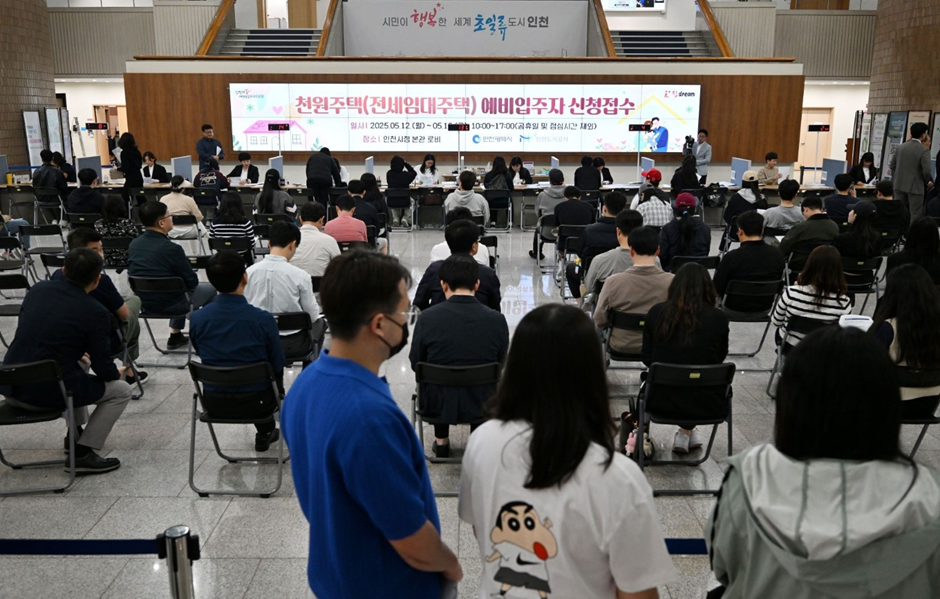
Incheon, a city where a thousand won is enough— Incheon’s signature people-centered innovation initiative, the “₩1,000 Series,” will expand to new areas in 2026
Moving beyond housing, food, logistics, and culture, the city’s initiative will now extend more deeply to residents’ everyday lives, addressing housing relocation costs, children’s mental health, and workers’ work environments.
Having established itself in 2025 as one of Incheon’s most recognizable and impactful livelihood policies amid enthusiastic public response and extensive media attention, the ₩1,000 Series will take another step forward in 2026 through the introduction of new initiatives and advancement of existing programs.
2026 ₩1,000 Policies Lower “Hidden Costs” in Daily Life
Everyday expenses, regardless of price, have long been considered unavoidable. This 2026, however, Incheon will fully launch new policies aimed at reducing those costs to just ₩1,000.
First, the “₩1,000 Brokerage Fee” program that took effect in January this year supports housing-vulnerable groups such as homeless youth, newly married couples, and near-poverty households. Eligible participants pay only ₩1,000 out of pocket when signing a housing lease contract, with brokerage fees capped at KRW 300,000.
Applications can be submitted by registered mail or in person (Incheon City Land Information Division). Detailed instructions are available on the Incheon City website (Korean only; incheon.go.kr > Incheon News > Announcements).
The “₩1,000 i-First Counseling” program, which supports initial counseling costs for families in crisis, will be introduced in January at four Comprehensive Child Welfare Centers.
For children in need of psychological or emotional counseling, the out-of-pocket cost for initial sessions will be reduced to ₩1,000; thus enabling families to begin counseling without financial burden.
Counseling with guardians is also available, improving access for families who previously hesitated due to cost barriers and serving as a new safety net to protect children’s mental well-being.
Meanwhile, the “₩1,000 Laundry Service” is scheduled to begin full operations in May.
Workers at small local businesses will be able to use workwear laundry services at an affordable rate, ranging from KRW 500 to KRW 1,000 per item. The laundry service will operate on weekdays from 9 AM to 6 PM. Businesses or individuals wishing to use the service can apply by phone, with pickup and delivery to be arranged on designated days based on the business location. * Service process: Phone request for pickup → Collection of workwear on the designated day → Washing and packaging → Delivery
This initiative reduces the need to wash workwear contaminated with hazardous substances at home, thereby protecting the health of workers and their families and contributing to the prevention of industrial accidents. Through this program, the city has created a turning point wherein the ₩1,000 Policy expands beyond welfare benefits to workplaces and family life.
2025: The “₩1,000 Series” Chosen by Citizens—Proven Results in Numbers
Throughout 2025, the ₩1,000 Series demonstrated its effectiveness through measurable outcomes.
The “₩1,000 Housing” program lowered housing costs for young people and newly married couples with rent set at KRW 1,000 per day (KRW 30,000 per month), recording high demand.
A total of 3,679 households applied for 500 units of purchase-type public rental housing in 2025, resulting in a competition ratio of 7.36 to 1. Another 1,906 households applied for 500 units of jeonse rental housing, for a competition ratio of 3.81 to 1. Of the planned supply of 1,000 units, 799 households had completed contracts and moved in as of end of December; thus demonstrating the effectiveness of the city’s youth housing policy.
Having expanded the “Half-Price Delivery” introduced in October 2024, the “₩1,000 Delivery” service has become the nation’s first public living logistics model.
Cumulative usage as of end of December 2025 exceeded 1.32 million cases, with participation from more than 8,100 small business owners. As a result, participating small businesses recorded an average sales increase of 13.9%.
The program also created mutually beneficial local jobs by employing 72 seniors and 48 career-interrupted women, expanding social participation and providing stable income; thus receiving positive feedback from participants.
In 2025, a total of 218,117 students across 11 universities used the “₩1,000 Breakfast” program, with the “₩1,000 Culture Ticket” receiving overwhelmingly positive public response as well. Approximately 5,000 residents enjoyed performances, sports, and tourism programs for just KRW 1,000.
Under the same philosophy as the ₩1,000 Series, the i-Sea Pass, which has helped popularize maritime transportation, recorded approximately 871,000 uses in 2025—an increase of 30% year-on-year—and contributed to a KRW 8.2 billion increase in island tourism revenue. By enabling island travel at fares in the ₩1,000 range, the program has been recognized as a people-centered transportation policy that integrates maritime travel into everyday life.
Continuing the ₩1,000 Series: From Expansion to Completion
This 2026, the ongoing ₩1,000 Series will focus less on quantitative expansion and more on strengthening program stability and sustainability.
The “₩1,000 Housing” program will maintain its annual supply of 1,000 units (2025–2026) while expanding its budget and linking with the “1.0 Interest Support” program to ease the burden of mortgage loan interest; thus further strengthening the housing ladder.
The “₩1,000 Delivery” service will prioritize stable operations and continued promotion following its second-phase expansion in November last year—which extended coverage to all 60 Incheon Subway stations—with focus on increasing participation among small business owners.
The “₩1,000 Breakfast” program will expand to 12 universities, while the ₩1,000 cultural initiatives will expand their schedule (twice a year, in May and October), participating facilities, and program offerings to enhance residents’ everyday experiences.
“The ₩1,000 Policy is not simply about sharing small benefits, but about changing the direction of administration so that all citizens can enjoy equal access to public services. We at Incheon will continue to develop people-centered livelihood policies that reach more deeply into the daily lives of residents,” Incheon Mayor Yoo Jeong-bok said.
 Automatic Translation
Initialize
Automatic Translation
Initialize
