- Phased installation at Bupyeong Station, Incheon Terminal Station, Technopark Station, Gyeyang Station, and Geomam Station -
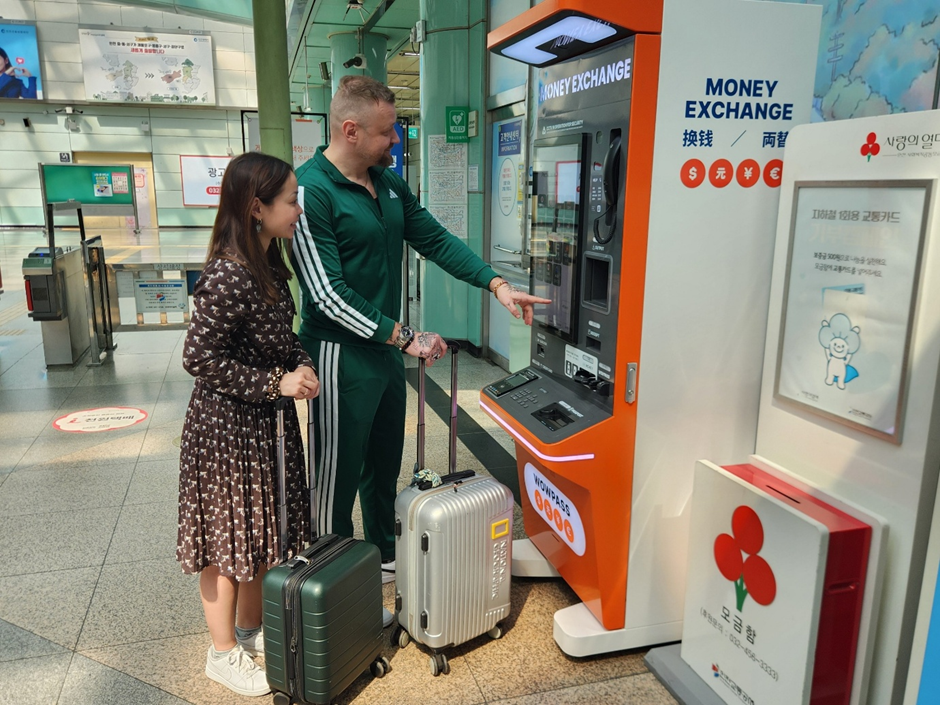
Incheon Metropolitan City (Mayor Yoo Jeong-bok) announced that it will sequentially install unmanned currency exchange kiosks at five major Incheon Subway stations from April to May as part of its initiative to improve living conditions as a global city.
Incheon is home to approximately 169,000 foreign residents—the fourth-largest foreign population in Korea. The number of inbound foreign tourists in 2024 also increased by 43% year-on-year to approximately 1.03 million, accompanied by a steady rise in demand for currency exchange services. * Inbound Foreign Tourists to Incheon: 2023: 717,058 → 2024: 1,031,287
(Source: Ministry of Culture, Sports and Tourism, International Visitor Survey)
In response, the city signed an agreement with the Incheon Transit Corporation in November last year to improve living conditions as part of its global city initiative. Incheon is now promoting the phased implementation of unmanned currency exchange kiosks alongside financial education programs for foreign residents.
The kiosks were first installed on April 13 at high-traffic stations—Bupyeong Station, Incheon Bus Terminal Station, and Technopark Station—with additional installations scheduled at Gyeyang Station and Geomam Station in May.
Key features include the ability to exchange currencies from up to 15 countries into Korean Won (KRW), as well as the purchase of major currencies such as U.S. Dollars (USD) and Japanese Yen (JPY). Users can also load foreign currency to a card using a mobile application. The kiosks further provide barrier-free services, including Braille buttons and voice assistance.
Currently, 24 unmanned currency exchange machines are in operation across Incheon; however, many are concentrated in hotels (17 locations) and Incheon International Airport, limiting accessibility.
The installation of kiosks within subway stations is expected to significantly improve access for both residents and foreign visitors. In particular, it is expected to greatly enhance financial convenience for foreign students and workers who previously needed to visit a bank or the airport.
Lee Seon-ho, Director of the Incheon Global City Bureau, stated, “As a global city, Incheon is experiencing growing demand for currency exchange services and globally competitive urban services amid increased domestic and international mobility of both citizens and foreign residents. We will continue our systematic development of world-class urban infrastructure to make Incheon a city that is convenient to live in and easy to travel for everyone.”
 Automatic Translation
Initialize
Automatic Translation
Initialize
