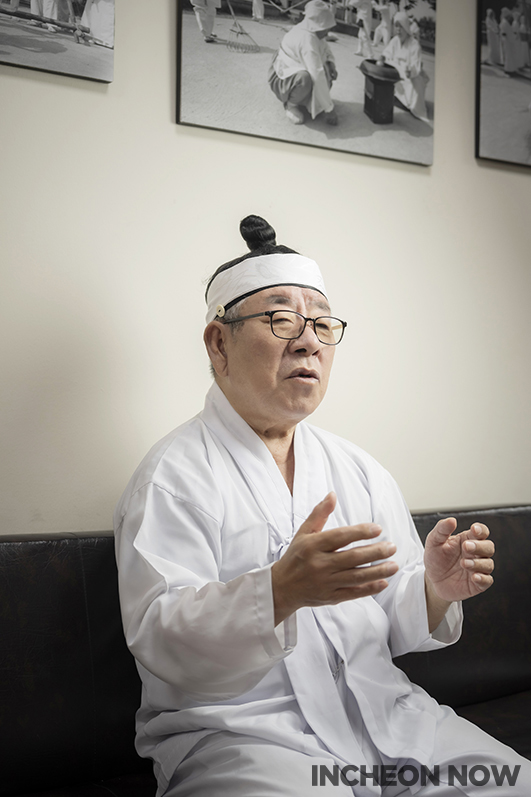
Sound of Old Songs
from Anchor Ropes
- Yoo In-gu, holder of Incheon City Intangible Cultural Property No. 5, Judae Sori
닻줄에 흐르는
옛 노랫소리
- 인천시 무형문화재 제5호 주대소리 보유자 유인구
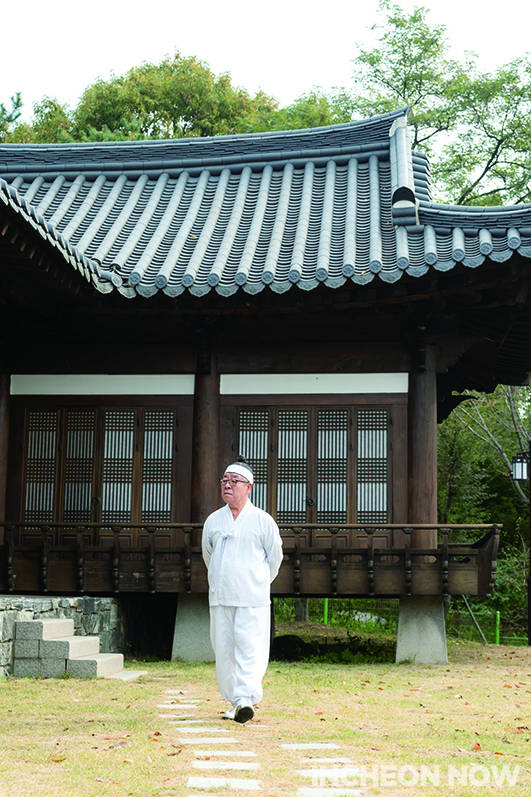
Songs have historically been a natural element of daily life.
Work songs, especially, were sung to ease the pain and grief of hard lives and to bring people together in harmony to transform deep sorrow into joy.
Incheon, a coastal city, has a tradition of work songs associated with boating.
One lasting example is ‘Judae Sori,’ sung while making anchor ropes, which persists today.
We spoke with Yoo In-gu, the keeper of this song, whose music reflects the struggles and effort of daily life.
노래는 오래전부터 일상 속에 자연스럽게 스며들어 있었다.
특히 노동요는 힘겨운 삶의 고통과 애환을 달래고, 여러사람이 호흡을 맞추기 위해 불렀다.
이렇게 마음 깊숙이 새겨진 한이 흥으로 승화된 것이다.
바다가 곁에 있던 인천에서는 뱃일과 관련된 노동요가 전해 내려온다.
그중에서도 닻줄을 만들 때 불렀던 ‘주대소리’가 지금까지도 이어지고 있다.
고되지만 묵묵하게 삶을 살아낸 서민들. 그 일상과 흘린 구슬땀이 고스란히 담긴 소리를 내는 유인구 보유자를 만나보았다.
Songs that Embrace the Lives of Fishermen in the Past
옛 어부들의 삶을 품은 노래
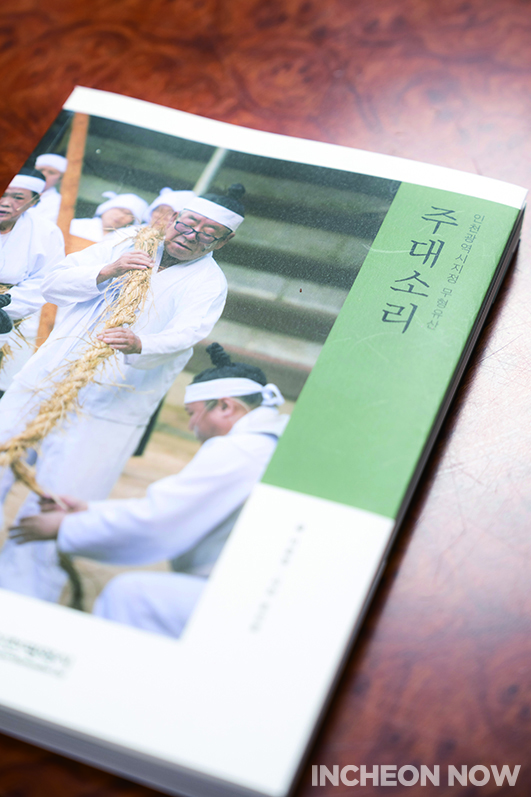
Judae Sori depicts the entire process of making anchor rope, from cutting down trees to crafting tools, to folding and storing the finished rope. The lyrics mention the names of trees and ropes, describing their uses and praying for a good catch.
주대소리는 닻줄 제작에 필요한 도구를 만들기 위해 나무를 베는 것부터, 완성된 줄을 포개어 보관하는 과정까지 전 과정을 담아낸 노래이다. 가사에는 나무와 줄 등의 명칭을 읊으며 용도를 설명하고 만선을 축원하며 풍어를 빌기도 한다.
"Today, ropes are durable for long-term use, but in the past, they would rot and decay in the sea. Each spring, villagers would spend a month working together to weave ropes, drag them out to sea, and install them on boats. This was a significant yearly event."
“지금은 오랫동안 줄을 사용해도 끄떡없지만, 당시만 해도 바닷물에 삭고 썩어버렸습니다. 그래서 매년 봄이면 한 달간 동네 사람들이 힘을 모아 줄을 엮고 그것을 바다로 끌고나가 배에 설치하는 것이 큰 연례행사였지요.”
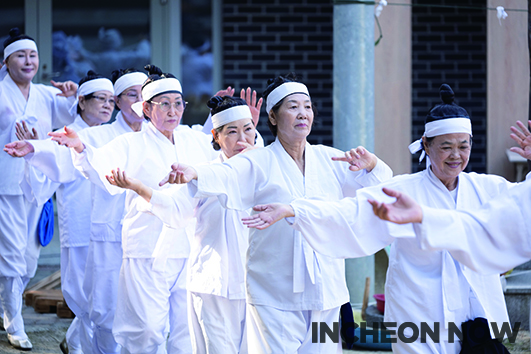
Yoo In-gu, the current holder of Judae Sori art, states that his songs reflect the life and culture of those times. They were originally sung while working, and he now performs them on stage while making anchor ropes.
주대소리를 이어가고 있는 유인구 보유자는 자신의 노래에는 그 시절의 삶과 문화가 담겨 있다고 말한다. 특히 일하면서 부르던 노래였기에, 그는 무대 위에서 실제로 닻줄을 만들며 노래를 부른다.
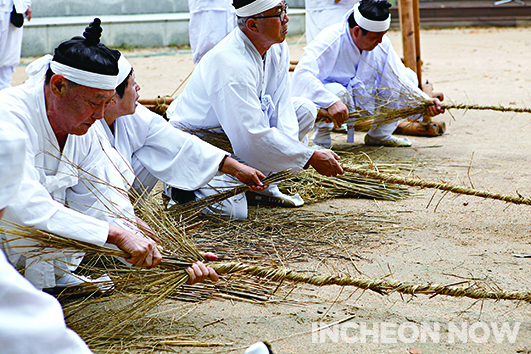
"When I sing Judae Sori while weaving the anchor rope, I understand why they sang it. As you twist the thin rope repeatedly, it thickens and forms a single, sturdy rope. The pride, joy, and sense of achievement from unity and completing the task are vividly expressed in the song."
“주대소리를 부르면서 닻줄을 엮다 보면 이 노래를 왜 불렀는지 알 것 같습니다. 가는 줄을 계속 꼬면 점점 굵어지고 결국 하나의 줄로 완성되거든요. 모두 한 마음으로 이뤄냈다는 뿌듯함과 일이 끝났다는 기쁨이 고스란히 전해집니다.”
His favorite part is the ‘Chaejinneun Sori,’ which is the sixth step in completing the rope, where the song is exchanged. Unlike other work songs, the lead and response songs are independent, and their harmonious combination of two distinct melodies creates the unique atmosphere of Judae Sori.
그가 가장 좋아하는 대목은 ‘채 짓는 소리’이다. 이는 엮은 줄을 마무리하는 여섯 번째 과정으로 노래를 서로 주고받으며 진행된다. 특히 다른 노동요와 달리 메기는 소리와 받는 소리가 독립적인 형태를 띠고 있다. 이에 전혀 다른 두 곡조가 어우러져 주대소리만의 독창적인 분위기를 느낄 수 있다.
Traditional Culture Continued Through the Song
소리와 함께 이어가는 전통 문화
Judae Sori was declared an Incheon Intangible Cultural Heritage in 1992, the same year Yoo In-gu started formal training in it.
1992년 인천시 무형문화재로 지정된 주대소리. 그 해는 유인구 보유자가 주대소리를 정식으로 배우기 시작한 해이기도 하다.
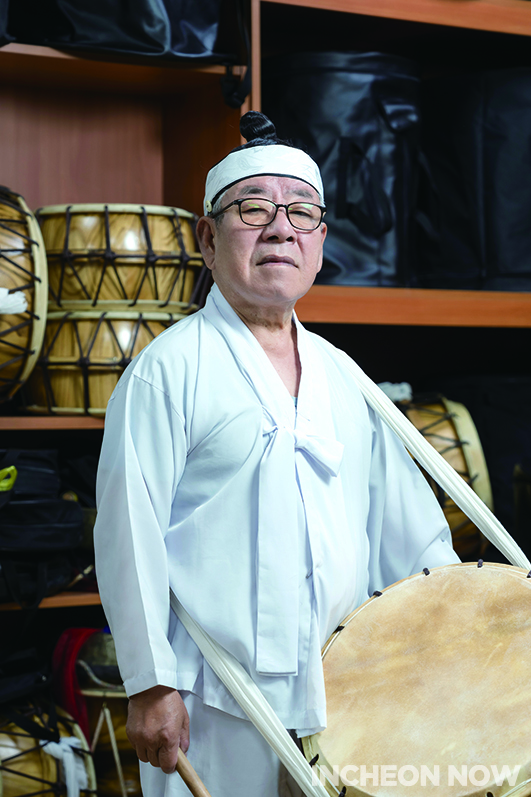
“I’ve always been interested in music. When samulnori (traditional percussion quartet) gained popularity, I began practicing pungmul (traditional percussion instruments) as a hobby. Eventually, I became a percussionist for the Incheongeunhae gaetganorae baennorae (intangible heritage), which led me to become familiar with Judae Sori. In 1992, Lee Myeong-rae, a cultural heritage holder, encouraged me to pursue music further.”
“음악에 관심이 많았습니다. 때마침 사물놀이가 유행하던 때라 취미로 풍물을 시작했어요. 이후 인천근해 일노래·뱃노래에서 사물악기 연주자로 활동하게 됐고, 그러다보니 자연스레 주대소리가 귀에 익었습니다. 그러다 1992년 이명래 보유자로부터 소리를 배워보라는 권유를 받았습니다.”
Since this wasn’t a feasible career choice, I continued learning while working. I aimed to attend transmission training sessions weekly and spent all weekends performing transmission performance. After retiring in 1979, I fully dedicated myself to this passion. Twenty years of dedicated activities as a transmission training instructor led to recognition, and I was designated as a holder on March 25, 2024.
하지만 이 일로 생계를 유지할 수는 없기에 직장 생활과 병행하며 소리를 배웠다. 일주일에 한 번씩은 전승교육에 참석하려고 노력했고, 전승공연에 오르기 위해 주말을 모두 바쳤다. 1979년 퇴임 이후에는 오롯이 이 일에 매진했다. 열정적으로 전승 교육사로 활동한지 20여 년, 지난 2024년 3월 25일 그 공로를 인정받아 보유자로 지정됐다.
The Judae Sori Preservation Society currently has 26 members, making it challenging to recreate the traditional form. Each member assumes two or three roles. Despite these difficulties, they continue performing on stage driven by a sense of duty and responsibility.
현재 주대소리 보존회에는 총 26명이 활동 중이다. 이 인원으로는 옛 모습 그대로 재현하기 쉽지 않다. 그래서 한 사람이 두세 가지 역할을 맡는다. 힘들지만 꿋꿋하게 무대를 꾸려가는 이유는 사명감과 책임감 때문이다.
“Some of our members have been active since before Judae Sori was designated a cultural heritage and still are today. Their efforts keep me motivated as a holder. Since we share the same work song, we collaborate to create a harmonious performance.”
“회원 중에는 주대소리가 문화재로 지정되기 전부터 시작해 지금까지 꾸준히 활동하는 분들도 있습니다. 이들의 노력이 제가 계속 보유자의 길을 걷게 하는 힘이지요. 함께 일하는 노동요를 전승하는 것인 만큼 서로 화합해서 무대를 꾸려가고 있습니다.”
Yoo In-gu, the holder of the art, ultimately seeks to fully restore Judae Sori. He is especially dedicated to reviving the traditional method of weaving sails using kudzu vines mixed with straw.
유인구 보유자가 바라는 최종 목표는 주대소리의 온전한 재현이다. 특히 과거 돛을 꼴 때 칡넝쿨을 가공해 짚단과 섞어 사용한 방식을 복원하고 싶어 노력중이다.
While I can’t always present the original form, I want to revive the old method as much as I can. I heard that kudzu vines are harvested in summer, so I’m exploring different options. I aim to deliver a performance that is as polished as possible.
The song, once sung to pray for a good catch, now resonates with a new sense of hope.
“항상 원형 그대로의 모습을 보여줄 수는 없지만, 가능한 옛 방식을 되살리고 싶습니다. 칡넝쿨을 여름에 채취를 한다고 하니 여러 방면으로 알아보는 중입니다. 힘 닿는 데까지 완성도 높은 무대를 선보이고 싶습니다.”
그 시절 만선을 기원하며 불렀던 노래가 이제는 또 다른 희망을 담아 울려 퍼지고 있다.
+ Judae Sori Order
+ 주대소리 순서
#1 Namu Taryeong
#1 나무타령
This song is sung while cutting down trees or making frames for tools like judaeteul and jauteul. The lyrics recite the names of famous Korean mountains and trees.
주대틀, 자우틀 등 도구를 만들기 위한 나무를 베거나 틀을 만들 때 부르는 노래이다. 한국의 명산과 나무의 이름을 읊어대는 노랫말로 되어 있다.
#2 Jau Sori
#2 자우소리
This song is sung while winding rope around a jauteul, a type of spinning wheel. The jauteul is turned by holding and releasing the rope or pulling it back.
물레의 일종인 자우틀에 줄을 감는 작업을 하면서 부르는 노래이다. 줄을 잡고 늦추거나 당겨 감기는 줄을 이용해 자우를 돌린다.
#3 Jul Noeun Sori
#3 줄 놓은 소리
This stage involves twisting three relatively thin ropes into one, performed by two people in pairs. The basic rope is made by mixing rice straw and arrowroot at a point fixed to the Apsullae (cantor). The rope is then looped around the jauson, twisted to the right, and wound backwards until it reaches Duitsullae (chorus).
가닥의 비교적 가는 줄을 꼬아 하나로 만들어 가는 단계로, 두 사람이 한 조가 되어 작업한다. 앞술레에 고정된 지점에서 볏짚과 칡을 섞어 넣어 기본 줄을 만들고, 그 줄을 자우손에 걸어 오른쪽으로 비틀어 감아가며 뒷걸음질해 뒷술레에 도달하는 방식으로 진행된다.
#4 Kkomsae Sori
#4 꼼새소리
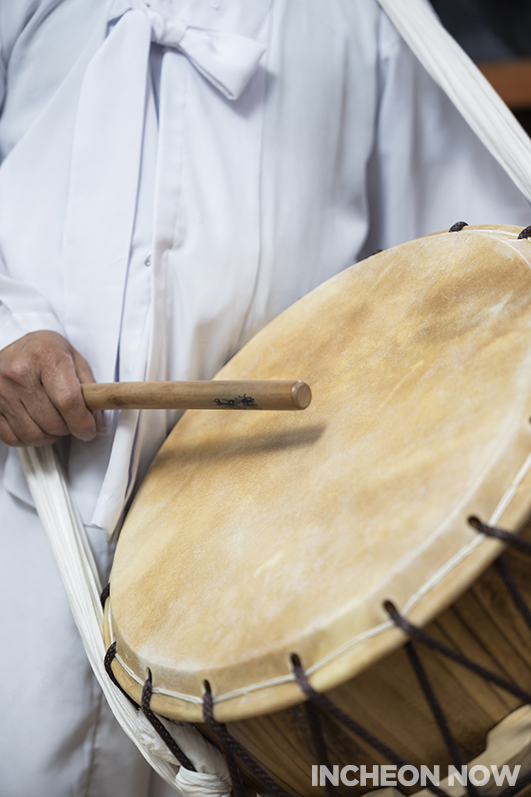
This stage involves twisting the rope more tightly by passing a hairpin through the jauson (a slightly curved piece of wood) and the bildae (a straight piece of wood). This process ensures that the three strings are aligned horizontally for easy plying.
자우손(약간 구부러진 나무토막)과 빌대(곧은 나무토막)로 비녀를 질러 돌리면서 줄을 더욱 단단하게 꼬는 과정이다. 이 공정을 통해 세 가닥의 줄을 합사시키기 편하게 수평을 이루도록 한다.
#5 Sullae Sori
#5 술래소리
This process twists the three horizontal strings from the Kkomsae process into a single, thick string. Here, the Duitsullae (chorus) moves towards the Apsullae (cantor) while twisting the rope by turning a hairpin.
꼼새 과정에서 수평으로 놓인 세 가닥의 줄을 하나의 굵은 줄로 합쳐 꼬는 과정이다. 이때 뒤술레는 비녀를 돌려 줄을 꼬며 앞술레 쪽으로 다가간다.
#6 Yeosa Sori
#6 여사소리
This process makes the strings joined through the Sullae process thicker using the same method. The name ‘yeosa’ comes from the way the thick strings are layered with thin strings, which is similar to clothing.
술래 작업으로 합쳐진 줄을 같은 방법으로 더욱 굵게 만드는 과정이다. 굵은 줄에 가는 줄을 덧입히는 모습이 옷을 입히는 것 같아 여사라고 한다.
#7 Chaejinneun Sori
#7 채 짓는 소리
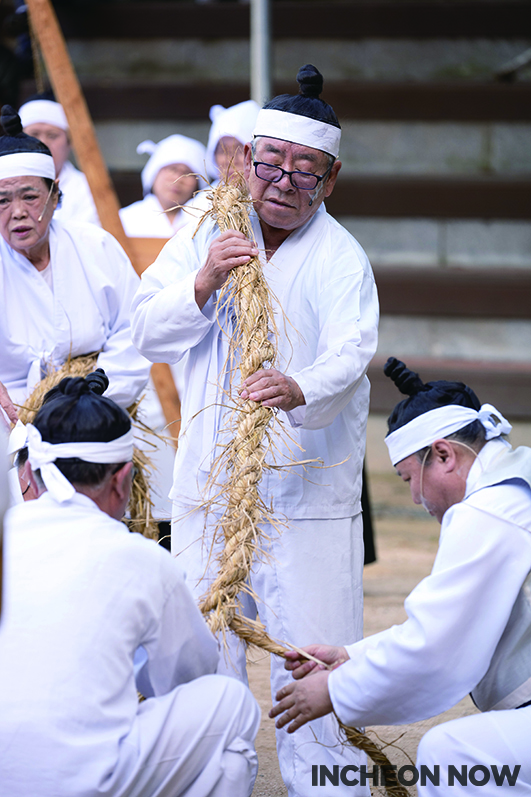
This is the final stage of the Sullae or Yeosa process. The three strings hung on the Byeongpan board are pulled out, and three people hold a single string each to weave them together, completing the process.
술래 또는 여사 과정의 마무리 단계이다. 병판에 걸려있던 3개의 줄을 뽑아 세 사람이 한 가닥씩 잡고 한 개 줄로 엮어 마무리를 하는 과정이다.
#8 Sari Sori
#8 사리소리
This stage involves wrapping the completed strings in many layers to prevent them from becoming tangled. The song is sung freely in two or three groups to synchronize the rhythm and encourage workers.
완성된 줄을 헝클어지지 않도록 여러 겹으로 둥글게 포개어 묶는 단계이다. 작업의 호흡을 맞추거나 힘을 북돋기 위해 노랫말이 없고 두 패 또는 세 패로 나누어 자유롭게 부른다.