-Improved traffic environment in old downtown... Average speed up 29%, delay time down 47%-
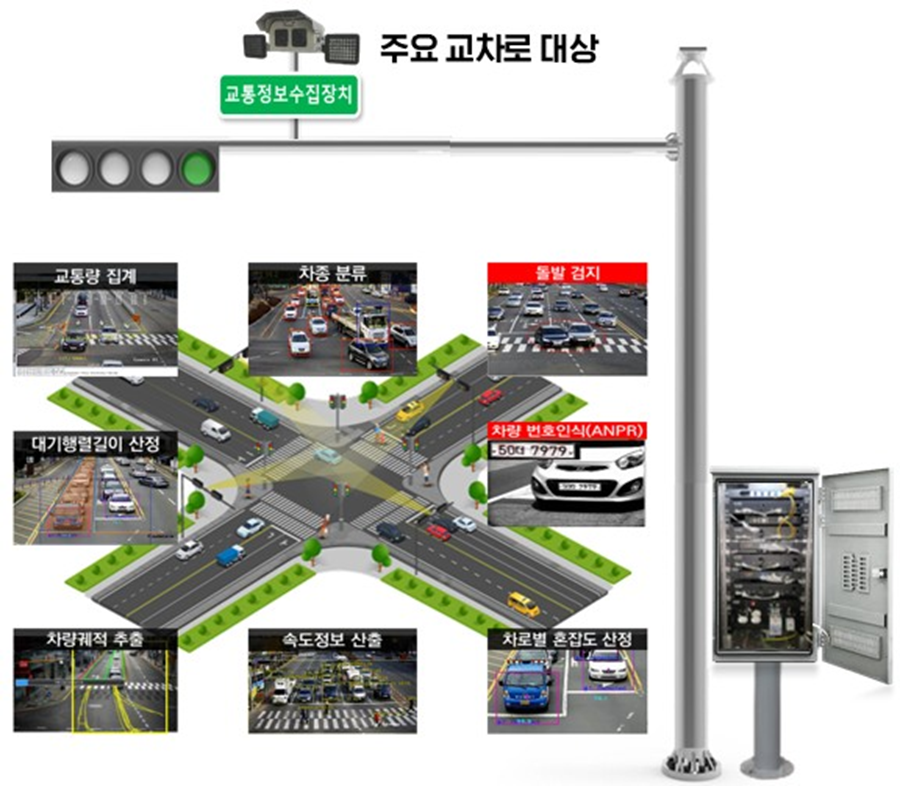
Incheon Metropolitan City (Mayor Yoo Jeong-bok) announced the results of its Smart Village creation project based on Intelligent Transportation Systems (ITS), launched last year to resolve urban imbalance by improving the poor traffic environment in the old downtown this year.
This project targeted areas with poor traffic conditions in Ganghwa County, Ongjin County (Yeongheungdo), Jung-gu, and Dong-gu. It involved the installation of ▲ 25 AI-based smart intersections, ▲ 4 left-turn signal-responsive intersections, and ▲ real-time signal information at 81 intersections, with full-scale operation commencing in January this year.
Key achievements include establishing 12 AI-based smart intersections along the approximately 6km section from Ganghwa Gapgot Checkpoint to Ganghwa Stadium Intersection, a previously chronically congested area. Furthermore, based on collected traffic data, the project optimized and applied traffic signal cycles through collaboration with the Incheon Police Agency and the Korea Expressway Corporation (effective October 24, 2025).
As a result, the average weekday travel speed in both directions improved by 29.3%, increasing from 28.3 km/h to 36.6 km/h. The average delay time in both directions also decreased by 47.6%, dropping from 4 minutes 30 seconds to 2 minutes 21 seconds.
The left-turn responsive signal system, which only grants left-turn signals when vehicles are detected, was implemented at one intersection in Ganghwa and three intersections on Yeongheungdo Island. As a result, the average delay time at these intersections decreased by 38.4%, improving from 15.1 seconds to 9.3 seconds. The number of unnecessary left-turn signal grants also decreased by 47.3%.
Additionally, to enhance driver convenience, real-time remaining signal time information is provided at 81 intersections: 64 in Ganghwa, 14 in Jung-gu, and 3 in Dong-gu. This information can be checked in real-time via Kakao Navi, Naver Maps (Navigation), T Map, and Hyundai/Kia in-vehicle navigation systems when approaching the intersection.
Furthermore, Incheon City plans to pilot 25 ‘Integrated Advertising Bus Information Displays’ starting January 2026. These combine advertising functionality with existing bus stop information displays. This pioneering national model aims to utilize the displays as community facilities for citizen engagement by showing commercial ads (including small business ads) alongside public service announcements.
The city plans to analyze the effectiveness after a trial period and comprehensively review factors like potential citizen inconvenience from ad exposure before deciding on future expansion.
Jang Cheol-bae, Director of the Transportation Bureau, stated, “We will continuously improve traffic issues by applying cutting-edge AI technology to the downtown transportation environment,” adding, “We will do our utmost to ensure Incheon grows into a competitive city through universal transportation welfare.”
