- Specialized training in infectious disease testing to be provided at local public health centers -
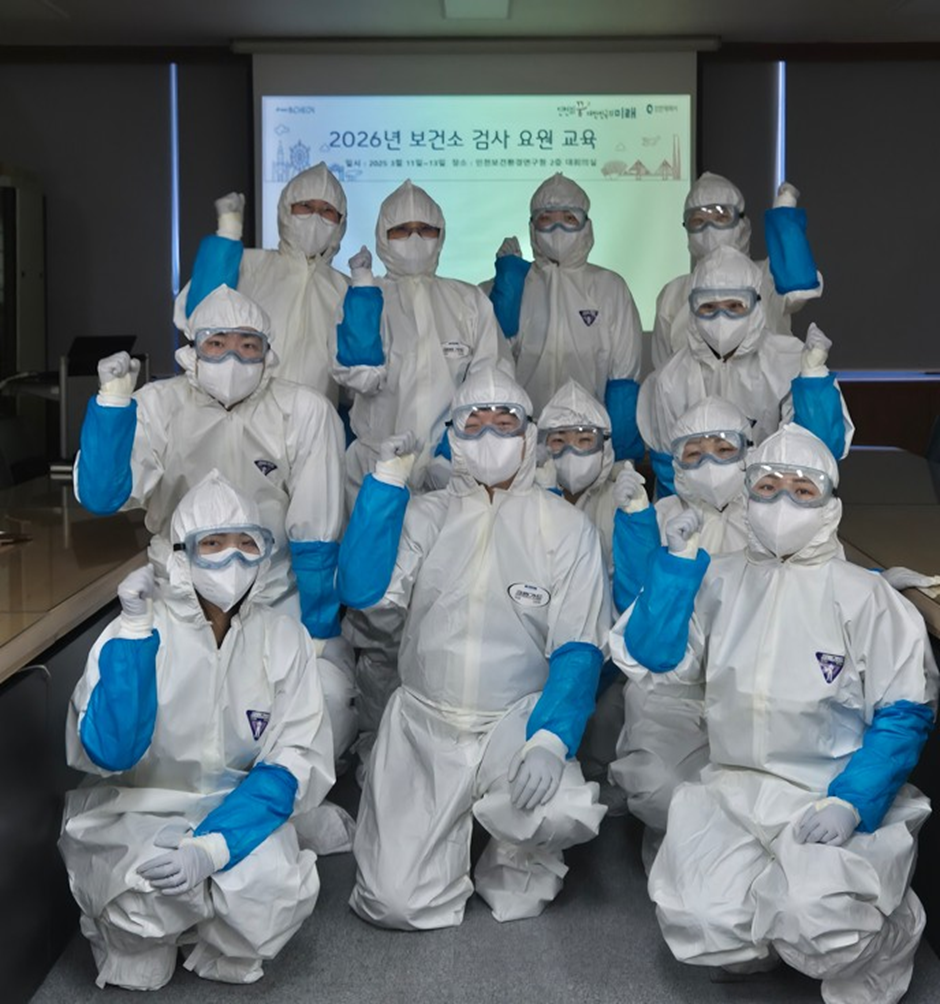
Incheon Metropolitan City (Mayor Yoo Jeong-bok) announced that the Incheon Institute of Health and Environment conducted a three-day training from March 11 to 13 for testing staff at public health centers across the city, focusing on strengthening capacity for infectious disease diagnosis.
The training was designed to improve the expertise and diagnostic accuracy of testing staff at public health centers working on the frontlines of infectious disease response, helping local communities contain outbreaks more quickly.
With imported infectious diseases on the rise in recent years, along with more varied outbreak patterns driven by climate change and other factors, the skill level and speed of response by the frontline testing staff have become a core foundation for protecting public safety.
Accordingly, the institute focused on further reinforcing the infectious disease response system through practical training built around real field conditions.
The training covered major infectious diseases, including enteric bacterial infections, syphilis, Human Immunodeficiency Virus (HIV), and malaria, combining both theory and hands-on practice.
To improve the accuracy of laboratory diagnosis, the training covered the latest testing methods and reviewed testing procedures and quality control systems in accordance with standard guidelines. Training on bioterrorism response procedures was also provided to further strengthen the preparedness for emergency situations.
In particular, the training went beyond simple technical instruction. It also reaffirmed a basic principle of public health that prompt and accurate diagnosis is the strongest mode of disease control. Because the impact of an infectious disease on a local community can vary greatly depending on how early it is detected, the institute once again emphasized that accuracy and accountability at the testing stage are more important than anything else.
The training also included a special lecture on infectious diseases from a humanities perspective, as well as a session introducing case studies from public health laboratories overseas. Participants were also given time to reflect on how infectious diseases have shaped society and history, while considering the responsibilities and roles of public health staff more broadly.
Kim Myeong-hee, Director of the Institute of Health and Environment, stated, “We will continue strengthening frontline testing capacity through ongoing specialized training and further solidify a local infectious disease response system that residents can rely on.”
