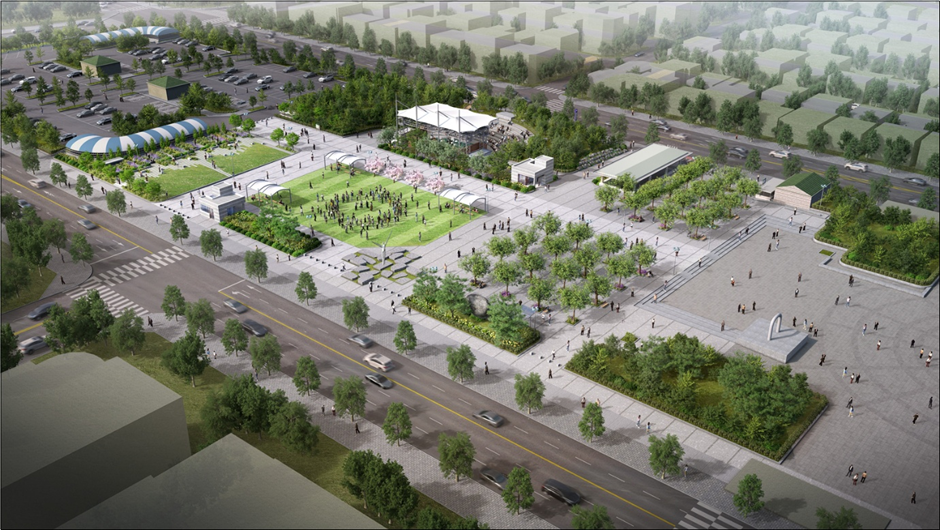
Incheon Metropolitan City announced that it will construct public parking lots with a total capacity of 800 spaces by utilizing the underground space of existing public facilities, such as parks, to alleviate parking shortages in the historic downtown area and improve parking convenience for residents.
This project targets the city center, where securing parking spaces is difficult, by constructing parking facilities in the underground spaces of public facilities—such as parks adjacent to residential areas—with the aim of expanding parking capacity while reducing the burden of securing separate land.
The city plans to first target the city centers of its eight districts, constructing one public parking facility per district—for a total of eight locations—with a capacity of approximately 800 spaces. The total project cost is 104 billion won, with the cost per parking space estimated at approximately 130 million won. The project is scheduled to be implemented in phases from 2027 to 2030.
Project sites will be selected based on a comprehensive review of location conditions and project feasibility. To this end, the city formulated a related plan last July and plans to allocate funds for site selection and feasibility studies in the 2027 main budget. The city has currently requested a review of the study proposal from the relevant departments.
Following preliminary procedures such as the study review and budget allocation, the city plans to conduct the site selection and feasibility studies for approximately six months starting in January 2027. Based on the results of the study, the city will select project sites and then proceed with the projects sequentially, following preliminary administrative procedures and detailed design based on the conditions of each site.
The Director of the Transportation Policy Bureau stated, “The lack of parking spaces in the old downtown area is a major inconvenience closely tied to citizens’ daily lives,” adding, “We will do our utmost to expand parking capacity by actively identifying usable spaces, such as underground areas beneath parks, and to improve the parking environment in a way that citizens can truly feel.”
