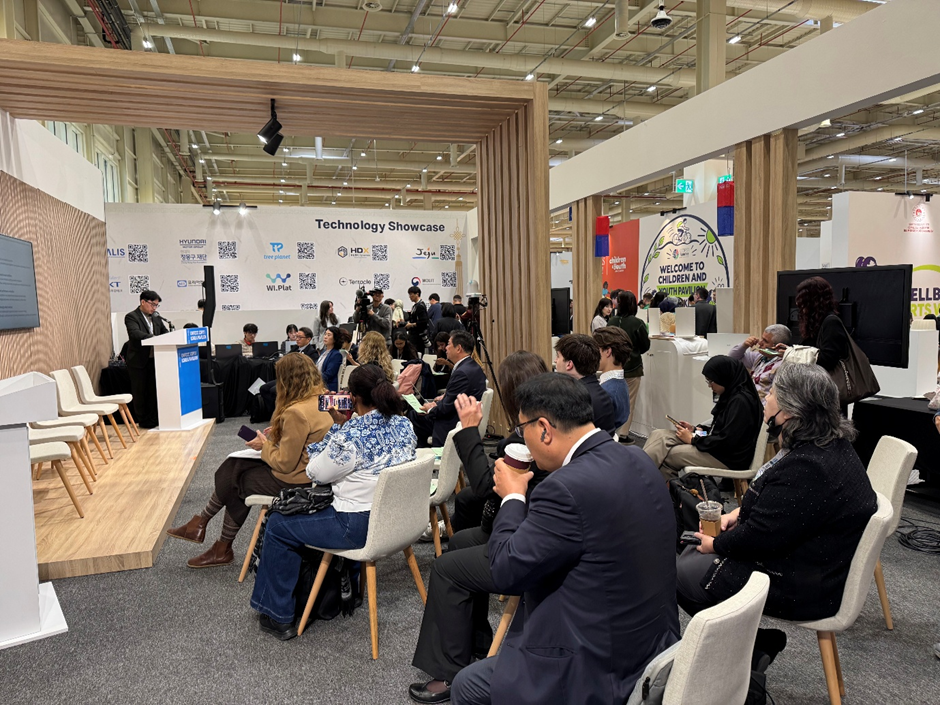
Incheon City is attending the Conference of the Parties to the United Nations Framework Convention on Climate Change (UNFCCC) to strengthen its position as a leading city in responding to the global climate crisis and to actively promote its “2045 Carbon Neutrality” vision to the international community.
Incheon Metropolitan City announced that on the morning of the 10th (local time), a city delegation attending the 31st Conference of the Parties to the United Nations Framework Convention on Climate Change (COP31) in Antalya, Türkiye, hosted an international seminar at the Blue Zone Korea Promotion Pavilion on the theme of “The Role of Local Governments in Carbon Neutrality and Responding to the Climate Crisis.”
The Conference of the Parties (COP) to the United Nations Framework Convention on Climate Change (UNFCCC) is the largest international climate conference, bringing together approximately 190 parties from around the world to discuss measures to prevent global warming and address the climate crisis.
This seminar, organized by Incheon Metropolitan City, was held in collaboration with the ICLEI East Asia Regional Office, the ICLEI Korea Office, and the Carbon Neutrality Research Support Center at the Incheon Research Institute.
The event was attended by a large number of domestic and international climate and environmental experts, as well as representatives from international organizations, who engaged in multifaceted discussions on carbon neutrality implementation strategies at the local government level and avenues for global cooperation.
During the presentation session, a senior researcher from the Incheon Research Institute introduced a pioneering emissions reduction model under the theme “Incheon City’s Carbon-Neutral Climate Crisis Response Strategy and Establishment of an Implementation Framework.”
Following this, international case studies were presented: Lynda Hopkins, Supervisor of Sonoma County, California, USA, discussed examples of city-level policy formulation; Benjamin Jance IV, Head of the Research and Innovation Department at GCoM, highlighted the importance of data-driven urban climate policies; and the Deputy Director of the ICLEI Korea Office addressed the need for inter-city networks to support sustainable development.
During the discussion session, Kim Seung-hyun, Section Chief of the Climate Adaptation Policy Bureau at the National Climate Crisis Response Committee, participated as a panelist. Speaking on the topic “The Role of Local Governments in the Era of the Climate Crisis and Governance with the Central Government,” he emphasized the importance of a close cooperation system between the central and local governments.
The Director of the Climate Action Division of Incheon Metropolitan City stated, “Incheon is pursuing innovative policies—such as the transition of the Yeongheung Thermal Power Plant to clean energy and the establishment of a climate response fund—with the goal of achieving carbon neutrality (Net-Zero) by 2045, five years ahead of the national target (2050).” He added, “Moving forward, we will continue to implement specific action plans to address the climate crisis without delay, together with our 3 million citizens.”
The city then appealed to the international community attending the seminar, urging continued interest and support from countries and international organizations worldwide for Incheon’s bid to host the “2028 G20 Summit.” Incheon, as the gateway city to South Korea and a climate leader hosting the Green Climate Fund (GCF) headquarters, hopes to welcome world leaders to this meaningful event.
Incheon City plans to use the hosting of this COP31 international seminar as an opportunity to reinforce its status as a leading city in addressing the climate crisis in the eyes of the international community, while focusing its diplomatic efforts on building global consensus for hosting the 2028 G20 Summit.
