[COLUMN] Learning Korean Through K-Dramas When Language Becomes Culture
Learning Korean Through K-Dramas
When Language Becomes Culture
드라마 보고 한국어 배우기
: 말이 문화가 되다
By Ahn Jae-rin 글. 안재린
Assistant Professor, Department of Modern and Classical Languages, George Mason University Korea
한국조지메이슨대학교 현대·고전언어학과 조교수
PhD in Curriculum and Instruction (World Language Education)
교육과정 및 교수법 박사(세계언어교육 전공)
“I learned it from K-Dramas!”
“K-드라마를 보면서 배웠어요!”
It is something I often hear in Korean language classes these days. When students easily understand or use expressions we have not yet covered in class, I ask where they learned them. More and more often, the answer is K-dramas. I first noticed this change around the time My Love from the Star (2013) became popular. At the time, there were reports that the drama had sparked growing interest in “chimaek”—the combination of fried chicken and beer—in China. My students also began using the word chimaek in class. A word I had never taught them had found its way into their conversations through a K-drama.
요즘 한국어 교실에서 종종 듣게 되는 말이다. 학생들이 아직 수업에서 다루지 않은 표현을 어려움 없이 알아듣거나 사용할 때, 어디에서 배웠는지 물어보면 드라마라고 대답하는 경우가 부쩍 많아졌다. 이런 변화를 처음 실감한 건 드라마 〈별에서 온 그대〉(2013)가 인기를 끌던 무렵이었다. 당시 이 작품을 계기로 중국에서도 치킨과 맥주를 함께 즐기는 ‘치맥’에 대한 관심이 높아졌다는 보도가 나왔다. 내가 가르치던 학생들도 수업 중에 ‘치맥’이라는 단어를 쓰기 시작했다. 교실에서 따로 가르치지 않은 말이 드라마를 타고 학생들의 대화에 등장한 것이다.

- A scene from My Love from the Star (2013)
- 별에서 온 그대(2013) 영상 캡쳐본
From Winter Sonata (2002) and Jewel in the Palace (2003), which helped spread the Korean Wave, to Squid Game (2021), viewers around the world have encountered the Korean language and everyday Korean culture through K-dramas. Dramas show not only what people say, but also the situations in which expressions are used. By observing who is speaking to whom, along with the characters’ facial expressions and tone of voice, viewers can understand how words are used in context. For example, “gwaenchanayo” (“It’s okay”) can be used either to reassure someone or to politely decline an offer. Learning expressions in such specific contexts can make it easier to understand and remember when, how, and with whom to use them. And after hearing the same expressions repeatedly across different scenes, viewers may become familiar with them without even trying to memorize them.
한류 확산을 이끈 〈겨울연가〉(2002)와 〈대장금〉(2003)에서 〈오징어 게임〉(2021)에 이르기까지, 여러 나라의 시청자들은 한국 드라마를 통해 한국어와 한국의 생활 문화를 접해 왔다. 드라마에서는 말뿐 아니라 그 말이 쓰이는 상황도 함께 볼 수 있다. 누가 누구에게 어떤 말을 하는지, 인물의 표정과 말투는 어떤지 함께 살펴보며 표현의 의미와 쓰임을 짐작할 수 있는 것이다. 예를 들어 “괜찮아요”라는 말은 상대를 안심시키는 장면에서도, 제안을 정중히 거절하는 장면에서도 쓰인다. 이처럼 구체적인 상황과 연결해 표현을 접하게 되면 그 말을 언제, 누구에게, 어떻게 쓰는지 이해하고 기억하는 데 도움이 될 수 있다. 또, 여러 장면에서 반복해서 듣다 보면 따로 외우려 하지 않아도 어느새 익숙해지는 표현도 생긴다.

My Love from the Star (2013)
- 별에서 온 그대(2013) 포스터
Korean learned through drama scenes can, in turn, deepen the viewing experience. Subtitles may be enough to follow the story, but reading a translation is different from listening to the characters themselves and following the rhythm and flow of their dialogue. The difference in word order between Korean and English is a good example.
장면을 통해 익힌 한국어는 다시 드라마를 감상하는 데 도움이 될 수 있다. 물론 자막만으로도 이야기를 충분히 즐길 수 있지만, 번역된 뜻을 읽는 것과 인물의 말을 직접 들으며 대사의 흐름과 호흡을 따라가는 것은 서로 다른 경험이다. 한국어와 영어의 어순 차이는 그 차이를 보여주는 좋은 예다.

- Jewel in the Palace (2003)
- 대장금(2003) 포스터

- Winter Sonata (2002)
- 겨울연가(2002) 포스터
Imagine a scene where the main character confesses their feelings. “Actually, I… you…” comes first, followed by a brief hesitation and then the final words: “joahae” (“I like you”). In Korean, the character’s feelings are not fully revealed until the end. In English, however, the feeling comes before the object, as in “I like you.” If the English subtitles show “I like…” or the entire sentence while the character is still hesitating, viewers learn how the character feels before hearing joahae. Even if the mood of the scene makes the confession predictable, the tension of the moment when those feelings are finally put into words can feel different.
가령, 주인공이 마음을 고백하는 장면을 떠올려 보자. “사실 내가 너를……”이라고 말한 뒤 잠시 머뭇거리다가 꺼내는 한마디. “좋아해.” 한국어에서는 상대를 향한 마음이 마지막 말에서 비로소 드러난다. 반면 영어는 “I like you”처럼 마음이 대상보다 앞에 온다. 주인공이 머뭇거리는 동안 영어 자막에 “I like….”나 문장 전체가 먼저 제시된다면, 시청자는 “좋아해”라는 말을 듣기 전에 그 감정을 알게 된다. 장면의 분위기로 고백을 예상할 수 있더라도, 그 마음을 말로 확인하는 순간의 긴장감이 달라지는 셈이다.
This also brings to mind the saying, “You have to listen to Korean until the very end.” In Korean, predicates and sentence endings play an important role in revealing a speaker’s thoughts and attitude. Paying attention to how a character finishes a sentence—and how long they hesitate before doing so—can offer a more nuanced understanding of both the dialogue and the emotions behind it. The desire to experience those emotional nuances firsthand can itself become a powerful motivation to learn more Korean.
‘한국말은 끝까지 들어 봐야 한다’는 말도 여기서 떠올려 볼 만하다. 한국어에서는 문장 끝의 서술어와 종결 표현이 화자의 생각이나 태도를 드러내는 데 중요한 역할을 한다. 인물이 어떤 말로 문장을 맺는지, 그 말을 하기 전 얼마나 망설이는지에 귀를 기울이면 대사의 뜻과 그 말을 하는 인물의 감정도 더 섬세하게 느낄 수 있다. 그런 감정의 흐름까지 직접 알아듣고 싶다는 마음이 한국어를 조금 더 배우고 싶은 훌륭한 동기가 될 수 있다.
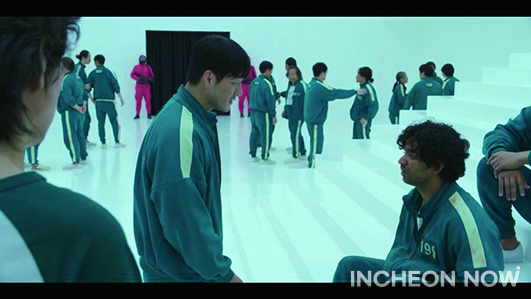
- A scene from Squid Game (2021)
- 오징어게임(2021) 영상 캡쳐본
Learning a language reveals more than differences in word order. In Squid Game, there is a scene where Sang-woo tells Ali, a foreign worker, to call him “hyeong.” In the Netflix English subtitles, this is translated as, “Just call me Sang-woo, okay?” Calling someone by name also suggests less formality and greater closeness, but hyeong carries an added nuance: it acknowledges an age difference while expressing intimacy through a term normally used for family. Learners who know hyeong simply as the word a man uses for his older brother can see through this scene how the term is also used between people who are not related. Understanding a single word can thus deepen our understanding of the relationship between characters.
언어를 알아 가면서 새롭게 보이는 것은 말의 순서만이 아니다. 〈오징어 게임〉에는 상우가 외국인 노동자 알리에게 자신을 ‘형’이라고 부르라고 하는 장면이 있다. 넷플릭스 영어 자막에서는 이름을 부르라는 말로 옮겨졌다(Just call me Sang-woo, okay?)**. 이름을 부르라는 말도 격식을 낮추고 가까워지자는 뜻을 전달하지만, 한국어의 ‘형’에는 나이 차이를 드러내면서도 가족을 부르는 호칭을 통해 친밀함을 표현한다는 점에서 차이가 있다. ‘형’을 단순히 남자가 자신의 손위 남자 형제를 부르는 말로만 배운 학습자라면, 이 장면을 통해 가족이 아닌 사이에서도 이 호칭이 어떻게 쓰이는지 짐작해 볼 수 있다. 단어 하나를 이해하는 일이 인물 사이의 관계를 읽는 일로 확장되는 것이다.

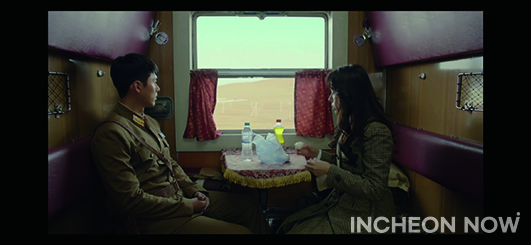
- A scene from Crash Landing on You (2019)
- 사랑의 불시착(2019) 영상 캡쳐본
That does not mean, however, that every expression picked up from a K-drama can be used in the same way in real life. Once, a student who had watched Crash Landing on You (2019) referred to South Korea as “Namjoseon,” making the whole class laugh. Namjoseon is the term used in North Korea for South Korea, but in English subtitles, it can appear simply as “South Korea,” just like the standard Korean term. In translation, the difference in perspective and usage can easily disappear.
그렇다고 드라마에서 들은 표현을 모든 상황에 그대로 사용할 수 있는 것은 아니다. <사랑의 불시착>(2019)을 본 한 학생이 한국을 ‘남조선’이라고 말해 한바탕 웃은 적이 있다. ‘남조선’은 북한에서 남한을 가리킬 때 쓰는 명칭이다. 하지만 영어 자막에서는 ‘한국’과 마찬가지로 ‘South Korea’로 옮겨질 수 있어, 자막만으로는 그 말에 담긴 관점과 쓰임의 차이를 알아채기 어렵다.
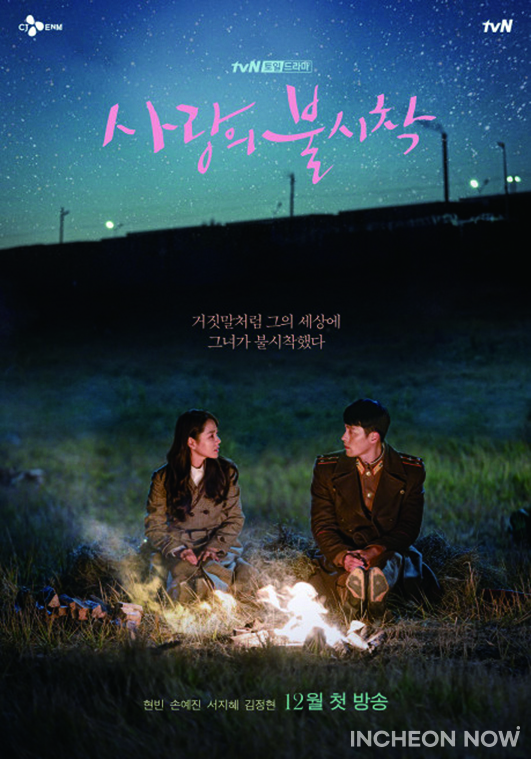
- Crash Landing on You (2019)
- 사랑의 불시착(2019) 포스터
Informal greetings offer an even more familiar example. Some students greet their teachers with “annyeong” rather than the polite “annyeonghaseyo.” Yet both can become “Hi” or “Hello” in English subtitles, obscuring the difference in formality and the importance of choosing a greeting according to whom you are speaking to. In such cases, I use the expressions students bring from dramas as a starting point to look at who the characters are to each other and why they speak the way they do. To use Korean learned from dramas in real conversations, learners need to consider not only what an expression means, but also who they are speaking to and in what situation.
반말 인사는 더 흔한 예다. 선생님에게 ‘안녕’이라고 인사하는 학생도 종종 있다. ‘안녕’과 ‘안녕하세요’가 영어 자막에서는 모두 ‘Hi’나 ‘Hello’로 번역되니 자막만으로는 상대에 따라 인사말을 달리해야 한다는 점을 놓치기 쉽다. 그럴 때는 학생들이 듣고 온 표현을 출발점으로 삼아 등장인물들이 어떤 관계이며 왜 그 말을 썼는지 함께 짚어본다. 이렇게 드라마에서 익힌 말을 실제 대화에서 활용하려면, 자신이 말하는 상대와 상황에 맞는 표현인지 살펴보는 과정이 꼭 필요하다.
When students say, “I learned it from a K-drama!”, it shows that learning Korean is already happening beyond the classroom. A few words picked up while following a favorite story can inspire them to learn more Korean. And as their Korean improves, they may begin to discover new meanings in familiar scenes—meanings they had not noticed before.
“드라마에서 배웠어요”라는 학생들의 말은 한국어 배움이 교실 밖에서도 이미 시작되고 있음을 보여준다. 좋아하는 이야기를 따라가며 익힌 몇 마디가 한국어를 더 배우고 싶은 이유가 되고 한국어를 배워 갈수록 같은 장면에서도 전에는 미처 듣지 못했던 의미를 새롭게 발견하게 될 것이다.

- Squid Game (2021)
- 오징어게임(2021) 포스터
