[COLUMN] FROM KOREAN MUSIC TO A TRULY GLOBAL SOUND : THE FUTURE OF K-POP IN A NEW ERA

FROM KOREAN MUSIC TO A TRULY GLOBAL SOUND
: THE FUTURE OF K-POP IN A NEW ERA
한국 음악에서 진정한 글로벌 음악으로
: 새로운 시대를 맞이한 K-Pop의 미래

By Lee Gyu-tag
(Professor, Department of Global Affairs, George Mason University Korea / Director, Global K-Culture Center)
글. 이규탁(Lee Gyu-tag)
(한국조지메이슨대학교 국제학과 교수 / 글로벌 K-컬처 센터장)

K-pop initially gained international recognition in the late 1990s across Greater China, including China, Taiwan, and Hong Kong. Its global reach expanded after the success of “Gangnam Style” in 2012 and BTS’s win at the Billboard Music Awards in 2017. By the 2020s, K-pop had transitioned from a passing trend to a globally acknowledged genre alongside rock, pop, and hip-hop. Notably, between 2023 and 2025, changes in production, distribution, and consumption have transformed the industry, marking a pivotal shift in how K-pop is perceived beyond its national origins.
1990년대 후반 중국·대만·홍콩 등 동아시아 중화권을 중심으로 국제적인 인기를 얻기 시작한 K-팝은 2012년 “강남스타일”의 전 세계적인 히트와 2017년 BTS(방탄소년단)의 빌보드 뮤직 어워드 수상 이후 동아시아를 넘어 전 세계의 음악으로 자리 잡았다. 이후 2020년대로 들어서며 K-팝은 일시적인 현상을 넘어 글로벌 음악 산업 내에서 영향력을 지속적으로 확대하며 록, 팝, 힙합 등과 더불어 국제적인 인지도를 가진 장르가 되었다. 특히 2023~2025년을 거치며 K-팝의 생산·유통·소비 방식은 크게 변화하였고, 이에 K-팝을 단순히 한국 음악이라는 국가적 범주로 이해하는 기존의 관점은 전환기를 맞고 있다.

1. BTS Group Photo (Source: HYBE)

2. “I Love Gangnam Style” Sculpture in Gangnam, Seoul
Recent changes highlight an increasing divide between domestic and international perceptions of K-pop. In Korea, it remains defined by visible markers of “Korean-ness,” such as Korean lyrics, members, and traditional cultural elements, with its global success seen as an extension of Korean cultural influence.
최근 K-팝에서 일어나고 있는 변화는 어떤 것이 있을까? 먼저, K-팝에 대한 국내외의 인식 차이가 점점 뚜렷해지고 있는 현상을 확인할 수 있다. 국내에서의 K-팝은 여전히 한국어 가사, 한국인 멤버, 전통문화 요소 포함 등의 ‘가시적인 한국성(韓國性, Korean-ness)’을 기준으로 정의되곤 한다. 따라서 K-팝의 인기는 곧 한국 문화에 대한 인기이며, K-팝의 국제적 성공은 한국인이라면 누구나 자랑스러워해야 할 ‘한국 문화의 승리’로 여겨지는 경우가 많다.
Globally, however, K-pop is increasingly regarded not as music confined to a particular country, but as a distinct international genre and industry model—characterized by performance-driven production, agency-led training systems, and fandom-centric structures.
반면 해외에서는 K-팝을 ‘한국’이라고 하는 특정한 국가에서 만들어진 음악이라는 개념을 넘어, 퍼포먼스 중심의 제작 방식, 기획사가 중심이 된 체계적인 연습생 발탁과 훈련 시스템, 팬덤에 기반한 산업 구조 등을 특징으로 하는 독자적인 글로벌 음악 장르 혹은 산업 모델로 인식하는 경향이 확산하고 있다.
Consequently, like hip-hop, K-pop is now understood as a form that can be created and performed beyond national borders, provided it reflects its unique system and aesthetics.
그 결과, 마치 힙합이 미국 흑인의 문화를 기원으로 하지만 특정한 음악 스타일과 미학, 철학을 보여준다면 한국인이 한국에서 만들고 부를 수도 있는 장르가 된 것처럼, K-팝 특유의 비즈니스 모델과 음악적 요소를 포함하기만 한다면 꼭 한국인이 아니더라도 얼마든지 K-팝을 만들고 부를 수 있는 것으로 여겨지기 시작한 것이다.

3. Rosé x Bruno Mars “APT.” (Source: THEBLACKLABEL)
These examples clarify the trend. The 2024 release “APT.,” a collaboration between BLACKPINK’s Rosé and international pop star Bruno Mars, aligns more with global pop in style and English lyrics. Nevertheless, it was widely embraced within the K-pop context and achieved significant success. Similarly, Netflix’s 2025 animation “K-Pop Demon Hunters” and its soundtrack “Golden” gained worldwide popularity while being recognized as K-pop content, despite limited direct links to Korea’s music industry. These instances indicate that K-pop is transforming from a regionally defined genre—centered on Korean artists singing in Korean—into a global cultural phenomenon shaped by shared production methods, industry frameworks, and musical and visual aesthetics.
이러한 변화는 구체적 사례를 통해 더욱 분명하게 드러난다. 2024년 블랙핑크 출신 로제와 글로벌 팝스타 브루노 마스의 협업곡으로 발매된 “APT.”는 음악 스타일이나 한국어가 거의 없는 영어 중심의 가사 측면에서 보면 분명 글로벌 팝 음악에 가깝지만, 실제로는 K-팝의 맥락에서 소비되며 큰 성공을 거두었다. 나아가 2025년 넷플릭스 애니메이션 ‘케이팝 데몬 헌터스’와 삽입곡 “Golden”은 한국 K-팝/문화 산업과 직접적으로 연계되어 있다고 보기 어려움에도 불구하고 국내외에서 자연스럽게 K-팝 콘텐츠로 인식되며 그 특징을 바탕으로 글로벌 흥행에 성공하였다. 이는 K-팝이 ‘한국에서 생산된, 한국인이 한국어로 부르는 음악’이라는 지역 문화로서의 개념을 넘어, 특정한 제작 방식과 산업 구조 및 음악적·시각적 미학을 공유하는 글로벌 문화 산업 모델로 확장되고 있음을 시사한다.


The emergence of “non-Korean K-pop groups” further illustrates this shift. Groups such as NiziU, composed entirely of Japanese members, and KATSEYE, a U.S.-based girl group with diverse ethnic backgrounds performing in English, reflect a new pattern distinct from traditional K-pop. While based outside Korea, they are still recognized as K-pop rather than J-pop or Western pop. This indicates that the “K” in K-pop is no longer confined to nationality or ethnicity, but has expanded to encompass a distinctive business model, an interconnected global media industry, and a cultural narrative that balances Korean specificity with global appeal.
또한 ‘비(非) 한국인 K-팝 그룹’의 등장 역시 최근 일어나고 있는 K-팝의 의미 변화와 확장을 보여준다. 일본인으로만 구성되어 주로 일본어로 노래하는 걸그룹 니쥬(NiziU), 백인, 흑인, 인도계, 히스패닉(라틴계), 동아시아계 등 다양한 인종·민족적 배경을 가진 멤버들로 이루어져 영어로 노래하는 미국의 걸그룹 캣츠아이(KATSEYE) 등은 다국적 멤버 구성과 더불어 한국이 아닌 다른 나라를 기반으로 국제적인 활동을 통해 전통적인 K-팝의 개념과는 다른 양상을 보인다. 이들은 한국 아닌 자국에서 주로 활동을 펼치면서도 일본 J-팝이나 미국 팝이 아닌 K-팝 그룹으로 인식된다는 공통점을 지니는데, 이는 K-팝 속 ‘K’가 더 이상 국적이나 인종·민족에 국한되는 것이 아니라 특정한 제작 시스템과 관리 방식이 포함된 K-팝 특유의 비즈니스 모델, 한국·동아시아·글로벌 미디어 산업이 연계된 산업 네트워크, 그리고 한국적 특수성과 글로벌 보편성을 조화롭게 포괄하는 문화적 서사 등을 모두 아우르는 개념으로 변화하고 있음을 보여준다.
These changes in K-pop raise significant questions about its future as well as the broader development of K-culture and the Korean Wave. Traditionally seen as the global dissemination of Korean cultural content, Hallyu now includes international productions with limited direct links to Korea. This indicates a shift from simply exporting content to fostering global collaboration and cultural exchange. Consequently, the meaning of the “K” in K-pop is no longer confined to Korean identity but has become a flexible concept embracing diversity and hybridity.
K-팝 내의 이와 같은 변화는 향후 K-팝의 미래뿐만 아니라 K-컬처와 한류의 미래에도 중요한 도전을 제기한다. 지금까지 한류는 ‘한국 문화 콘텐츠(K-컬처)의 해외 확산’을 일컫는 말이었으나, 이제는 한국 산업과의 직접적 연계성이 약한 해외 제작 콘텐츠조차 한류의 일부로 인식되는 현상이 나타나고 있다. 이러한 흐름은 한류가 단순한 콘텐츠 수출을 통한 해외 시장을 넘어, 글로벌 공동 제작과 문화적 상호작용을 포함하는 확장된 개념으로 변화하고 있음을 의미한다. 따라서 K-팝 속 ‘K’는 더 이상 고정된 한국성의 표현이 아닌, 문화적 다양성과 혼종성(hybridity)을 포괄하는 유연한 개념으로 재해석해야 할 필요성이 있다.
From its inception, K-pop has evolved by integrating influences from American, Japanese, and European pop music, reinterpreting them within Korea’s unique social and cultural context. As its globalization advances, a balanced approach is essential—one that preserves Korean identity while actively participating in global production networks and cultural diversity.
사실 K-팝은 시작부터 미국과 일본, 유럽 대중음악의 영향을 적극적으로 수용하여 그것을 한국의 정치·경제적, 사회적, 문화적 맥락 속에서 재해석·재창조한 음악으로 발전해 왔다. 즉 문화적 다양성과 개방성은 처음부터 K-팝의 경쟁력을 유지하는 핵심 요소였으며, K-팝의 글로벌화가 심화된 지금은 한국적 정체성을 유지하면서도 글로벌 제작 네트워크와 문화적 다양성을 더욱 적극적으로 수용하는 균형적 전략이 필요한 시기라고 할 수 있다.
Ultimately, K-pop and Hallyu can no longer be confined strictly to a national context. They should be viewed as dynamic concepts that are constantly evolving within the global cultural industry. Adopting this perspective will be crucial for their continued growth in the coming years.
결론적으로 K-팝과 한류는 더 이상 국가 중심 개념으로만 설명될 수 없으며, 글로벌 문화 산업 속에서 끊임없이 재구성되는 유동적 개념으로 이해되어야 한다. 이러한 인식 전환이야말로 향후 K-팝과 한류의 지속적 발전을 위한 핵심 과제가 될 것이다.
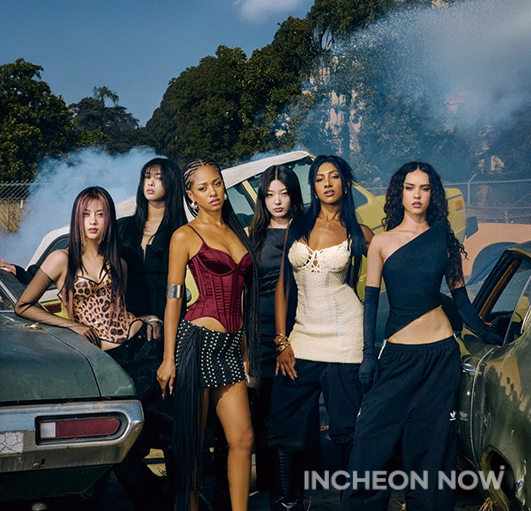
6. KATSEYE (Source: HYBE x Geffen Records)
